Interstellar Comet 3I/ATLAS Closest Approach to Earth 2025: Live Updates and How to See It
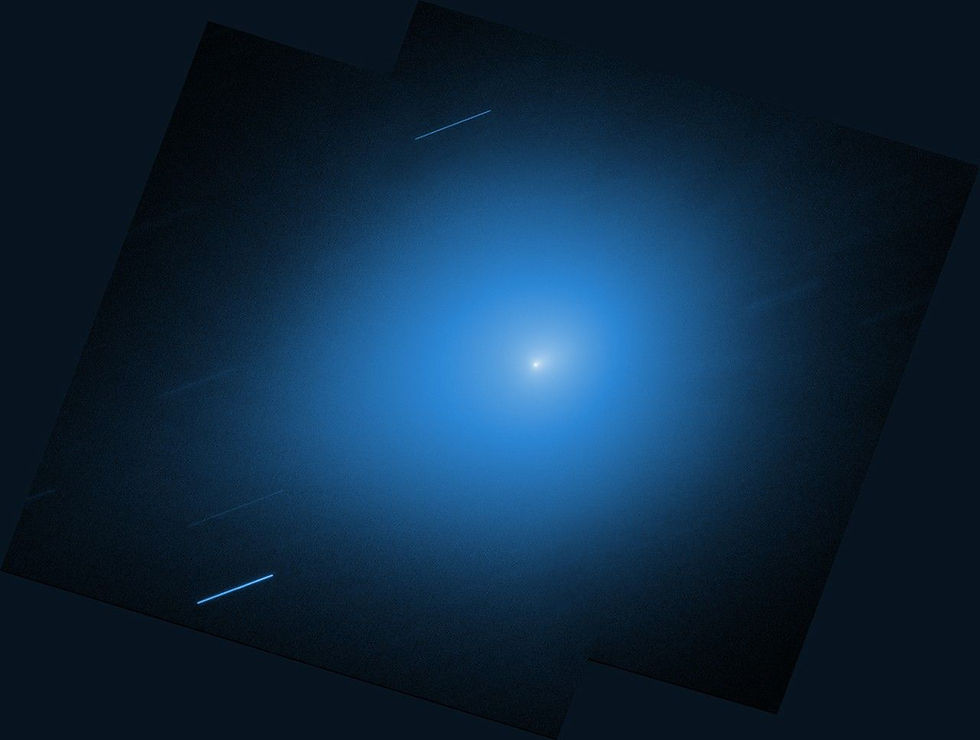
Comet 3I/ATLAS, discovered July 1, 2025, by the ATLAS telescope in Chile, marks the third confirmed interstellar object to invade our solar system. This hyperbolic wanderer from deep space near Sagittarius hurtles at over 50 km/s, its tiny nucleus—under 1 km wide—spewing a coma of CO2, water ice, and exotic volatiles. As it nears its Earth flyby on December 19, 2025, astronomers worldwide track its evolving green glow and massive 56,000 km anti-solar tail.
Discovery and Interstellar Origins of Comet 3I/ATLAS
Astronomers first spotted C/2025 N1 (ATLAS) on July 1, 2025, confirming its interstellar status through a hyperbolic eccentricity greater than 1, proving it unbound to the Sun. Unlike solar system comets, 3I/ATLAS entered from Sagittarius, possibly ejected from another star system billions of years ago. NASA’s Jet Propulsion Laboratory classifies it alongside ’Oumuamua (2017) and Borisov (2019), but its high-speed ingress—60 km/s at infinity—sets it apart.
Early observations revealed a reddish coma shifting greener post-perihelion, hinting at carbon-based chemistry alien to local comets. Ground telescopes like Gemini North captured brighter outbursts, while JWST and Hubble detected cyanide gas, atomic nickel, and steady 129 kg/s CO2 outgassing driving non-gravitational boosts. No fragmentation or major outbursts occurred, defying predictions for such a volatile intruder.
This comet offers a rare window into distant planetary nurseries, its composition revealing formation conditions impossible in our system. Indian skywatchers, from Delhi’s dark outskirts to southern observatories, joined global efforts, aligning with rising interest in space news amid ISRO’s lunar missions.
Trajectory Milestones: From Perihelion to Earth Flyby
3I/ATLAS hit perihelion October 29, 2025, at 1.36 AU—between Earth and Mars—intensifying its activity with a Sun-facing dust plume morphing into a vast tail. Mars orbiters, including NASA’s MRO and ESA’s TGO, imaged it October 8 at 0.194 AU, spotting unusual blue hues and tail loss that stunned experts.
Post-perihelion, it zipped past Venus at 0.65 AU in early November, then accelerates toward its Earth closest approach: 168 million miles (270 million km) on December 19. Currently 166.9 million miles away as of December 17, it shines at magnitude 11-12 in pre-dawn Virgo-Leo skies. Jupiter awaits in March 2026 at 0.36 AU before its solar escape.
Live tracking via NASA’s Eyes on the Solar System shows real-time positions, vital for 2025 comet chasers amid heightened interstellar hype. Speeding at 45 km/s near Earth, its path avoids collision but fuels speculation on cosmic visitors.
Scientific Breakthroughs and Bizarre Behaviours
Recent Gemini images reveal 3I/ATLAS brightening and greening, linked to diatomic carbon emissions rare in inner solar system comets. ESA’s Juice spacecraft snapped fresh views December 7, uncovering a “turned-on” jet pattern baffling teams. No water-driven jets dominate; CO2 sublimation propels it, with atomic metals suggesting high-energy origins.
Harvard’s Avi Loeb notes trajectory echoes toward the 1977 “Wow!” signal source, reigniting alien probe debates—though most favor natural ejection. NASA’s FAQ details facts: diameter ~0.5 km, no fragmentation risk, outbound velocity ensuring permanent exit. Indian astronomers contribute via ARIES Nainital, analyzing spectra for Earth-comparisons.
These quirks position 3I/ATLAS as 2025’s top astronomy event, blending raw science with public wonder.
Viewing Comet 3I/ATLAS: Global Best Spots for Closest Approach
At magnitude 11-12, observe 3I/ATLAS in pre-dawn skies through Virgo and Leo using 8-inch or larger telescopes from dark-sky locations worldwide. In India, target Bortle 7-8 sites like Rohtak outskirts near Delhi, Rajasthan’s desert observatories, or ARIES Nainital for optimal clarity amid urban light pollution.
Globally, prime viewing hubs include Chile’s Atacama Desert (ALMA site) for Southern Hemisphere dominance, Hawaii’s Mauna Kea (Gemini North observatory) showcasing its green coma, and Arizona’s dark skies at sites like Mount Lemmon or Kitt Peak National Observatory. Europe’s Canary Islands (Roque de los Muchachos) and Australia’s Siding Spring offer excellent Northern access, while South Africa’s Sutherland provides all-night sessions.
Rise 3-4 AM local time (adjust for IST: 9:30 PM-12:30 AM UTC equivalents); use Stellarium or SkySafari apps for precise charts near Spica. Space.com’s livestream by Gianluca Masi from Italy’s Virtual Telescope Project begins December 18 at 11 p.m. EST (9:30 a.m. IST Dec 19), ideal for remote viewers. Visibility peaks December 19 before outbound dimming—join local astronomy clubs for shared scopes and safety.


Comments