Triumph Tracker 400 vs Scrambler 400 X: Flat‑Track Fun Meets All‑Road Freedom

Triumph Tracker 400: What Is It?
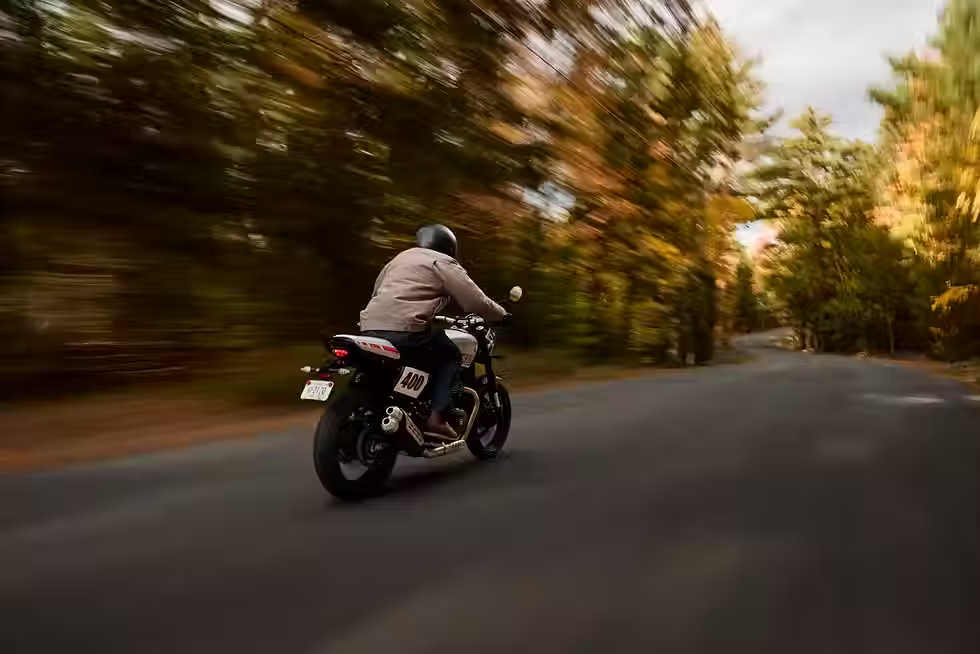
The Triumph Tracker 400 is the flat‑track inspired member of Triumph’s 400 cc TR‑Series, built to deliver agile handling, minimalist design and serious everyday usability. Sitting between a naked roadster and a scrambler, it targets riders who want urban agility, weekend fun and a distinctive flat‑track stance without jumping to larger, heavier machines.
In the UK, the Tracker 400 is priced from around £5,745 on the road, positioning it just under or around the Scrambler 400 X and making it one of the most accessible “modern classic” Triumphs. With the same TR‑Series engine family as the Speed 400 and Scrambler 400 X, it gives new riders and enthusiasts a premium entry point into the Triumph brand.

Engine, Performance and Technology
Powering the Tracker 400 is a 398 cc, liquid‑cooled, single‑cylinder DOHC engine that produces about 41.4 bhp at 9,000 rpm and 37.5 Nm of torque at 7,500 rpm in UK‑spec trim. This is one of the strongest outputs in the 400 cc single‑cylinder class, and Triumph has tuned it for a sharp mid‑range and higher‑rev ceiling compared to earlier 400 models.
The engine is paired with a six‑speed gearbox and a slip/assist clutch, which lightens the lever feel in city traffic and adds stability during aggressive downshifts. Rider‑aid tech includes switchable traction control and ABS, giving the Tracker 400 a modern safety package that appeals to newer riders without overwhelming them with complex electronics.
Chassis, Brakes and Real‑World Usability
Underneath, the Tracker 400 uses a tubular steel hybrid spine/perimeter frame with a bolt‑on rear subframe, designed to balance stability with quick steering. Suspension is oriented towards sporty road use and light flat‑track style riding, offering enough compliance for rough urban tarmac without becoming too soft for spirited cornering.
A 13‑litre fuel tank and a claimed fuel consumption of roughly 78.5 mpg give a theoretical range of more than 220 miles, making it practical for daily commuting and longer weekend runs. Braking is handled by disc brakes with ABS, tuned for progressive feel rather than abrupt bite, which suits both newer and experienced riders in mixed conditions.
Design and Features: Flat‑Track Attitude
Triumph markets the Tracker 400 as “stripped‑back flat‑track attitude”, with a minimalist tail, number‑board‑style side panels and a compact front section. Wide, relatively low handlebars and a slim tank promote a forward‑biased yet comfortable riding position ideal for urban slicing and playful corner exits.
Equipment levels are in line with the rest of the 400 range: all‑LED lighting, modern instrumentation with analogue‑style speedometer and LCD display, ride‑by‑wire throttle, and switchable traction control. The finish, from paint quality to engine detailing, is aimed at giving a “big Triumph” feel at a smaller‑bike price.

Tracker 400 vs Scrambler 400 X
Below is a high‑impact comparison of the Triumph Tracker 400 and the Scrambler 400 X based on core specs and real‑world usage.
Aspect | Triumph Tracker 400 | Triumph Scrambler 400 X |
|---|---|---|
Type | Flat‑track inspired road bike with minimalist design and sporty ergonomics. | All‑road scrambler with longer suspension, protection and classic off‑road stance. |
Engine & Output | 398 cc liquid‑cooled single; about 41.4 bhp @ 9,000 rpm, 37.5 Nm @ 7,500 rpm (revvier tune). | 398.15 cc liquid‑cooled single; 40 PS @ 8,000 rpm, 37.5 Nm @ 6,500 rpm (torque earlier in revs). |
Riding Focus | Urban fun, flat‑track style cornering, sporty road use. | Mixed on‑road and light off‑road, broken roads, gravel and bad weather versatility. |
Suspension | Road‑biased setup for agility and fast direction changes. | Dedicated scrambler chassis with 150 mm travel USD forks and adjustable rear monoshock. |
Wheels & Tyres | Cast alloy wheels with street‑oriented tyres (flat‑track style stance). | 19‑inch front and 17‑inch rear cast V‑spoke wheels with all‑road tyres for extra grip off‑tarmac. |
Seat Height & Ergonomics | Slightly lower, more aggressive stance with wide bars; geared for agile road handling. | 835 mm seat, commanding upright posture, wide bars and relaxed ergonomics for control on varied surfaces. |
Protection & Hardware | Minimal bodywork; designed more for style and light fun than rough‑trail protection. | Extra protection for sump, radiator, headlight plus handguards and longer mudguard for all‑road riding. |
Electronics | ABS, switchable traction control, ride‑by‑wire; modern LCD/analogue combo. | Similar suite: ABS, switchable traction control, LED lighting and modern instruments. |
From a usage perspective, the Tracker 400 suits riders who stay mostly on tarmac, ride aggressively in the city and love the flat‑track aesthetic. The Scrambler 400 X is better suited to those who frequently encounter bad roads, mild trails or long distances on mixed surfaces and need more ground clearance and protection.
Which One Should You Choose?
Choose the Triumph Tracker 400 if style, agility and a slightly sportier engine character matter most, and your riding is 90% on paved roads. It offers strong performance, excellent fuel economy and an engaging riding position that makes everyday commuting feel like a short flat‑track session.
Opt for the Scrambler 400 X if you want an all‑rounder that can tackle potholes, gravel and weekend trails without stress, backed by scrambler‑specific suspension and added protection. For riders comparing both in the UK or India, the decision will largely come down to where you ride most and whether you prefer flat‑track aggression or scrambler versatility in your 400 cc Triumph.


Comments