The Enigmatic Comet 3I/ATLAS: Unraveling the Mysteries of an Interstellar Visitor

Discovery of Comet 3I/ATLAS: A New Interstellar Visitor
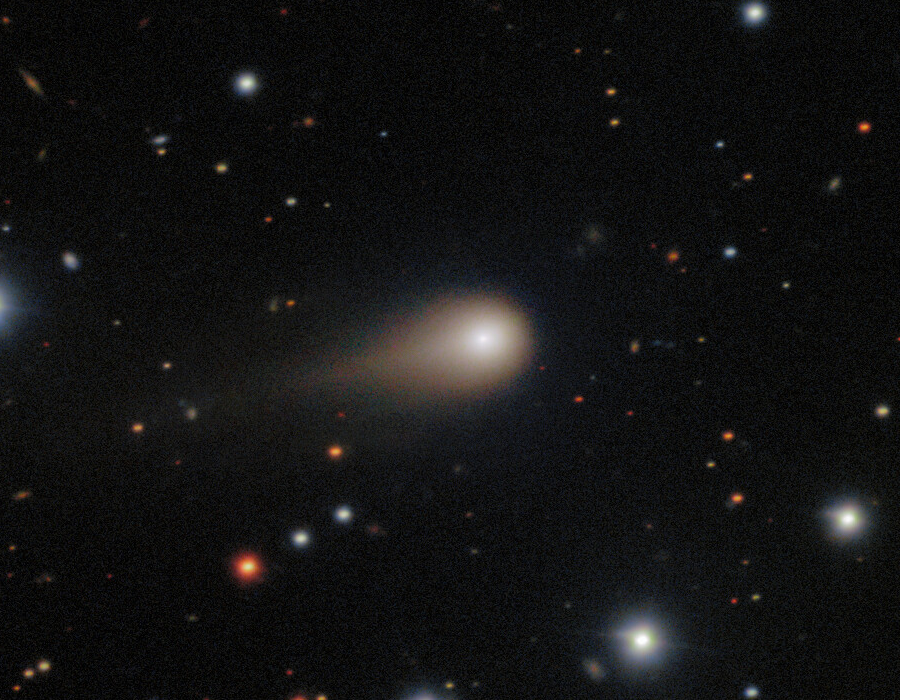
On July 1, 2025, astronomers made a groundbreaking discovery—the detection of 3I/ATLAS, the third confirmed interstellar object passing through our Solar System. Unlike native comets orbiting the Sun, 3I/ATLAS is a cosmic traveler, sweeping into our celestial neighborhood from a distant star system on a hyperbolic trajectory that ensures it will never return. This comet has already captivated scientists and the public alike due to its extraordinary features that defy conventional cometary science.
A Cosmic Wanderer from Beyond
3I/ATLAS’s velocity at the time of entry was about 58 kilometres per second, making its path much faster and more linear than typical Solar System bodies, with an orbital eccentricity greater than 6. This extreme trajectory confirms its interstellar origins, following only 1I/ʻOumuamua in 2017 and 2I/Borisov in 2019 as visitors from other star systems. Its journey through the Solar System, coming closest to the Sun in late October 2025, has offered a rare window to study a comet formed around a different star, estimated to be at least seven billion years old—nearly twice as old as Earth.

Strange Behaviour Near the Sun
One of the great mysteries surrounds 3I/ATLAS’s unexpected brightening and vivid blue glow as it approached perihelion. Unlike typical comets that tend to redden when heated, this comet’s coma—an envelope of gas and dust—turned distinctly blue. This unusual color shift puzzled astronomers who tracked the comet using NASA’s and ESA’s solar-observing satellites. The intense blue color likely signals an uncommon chemical composition or complex interaction with the solar wind and radiation.
Even more perplexing is 3I/ATLAS’s non-gravitational acceleration. As it neared the Sun, the comet sped up beyond what gravity alone would predict, deviating about 4 arc seconds from its expected path. Normally, comets can be influenced by jets of gas as their ices sublimate, but this comet’s acceleration would require an unnatural amount of outgassing, without visible debris—fuelling speculation over whether conventional models fully explain its motion.
Chemical Oddities: Water, Nickel, and More
NASA’s Neil Gehrels Swift Observatory detected hydroxyl (OH) gas from the comet, confirming that water ice sublimation was occurring even far from the Sun. This is a vital chemical fingerprint linking 3I/ATLAS to cometary activity. However, unlike typical Solar System comets, it has exhibited an unusual atmosphere with nickel vapor detected at trace levels but minimal iron—a combination not seen before.
Spectroscopic studies further reveal that 3I/ATLAS is unusually rich in carbon dioxide and cyanide gases, hinting at a composition quite different from local comets that could suggest unique conditions in its home planetary system.

The Alien Probe Hypothesis
Perhaps the most sensational and controversial aspect of this comet is the proposal by Harvard astrophysicist Avi Loeb. He suggests that some of 3I/ATLAS’s baffling characteristics—such as its acceleration, composition, and trajectory alignment with planetary orbits—could point to a non-natural origin. Loeb speculates it could be a piece of alien technology or a probe sent from another civilisation. A viral claim even posits the comet emitted signals following a Fibonacci sequence at the famous 1420 MHz hydrogen line, a pattern that could indicate an intelligent message.
Though these ideas remain speculative and contested, they underscore the profound curiosity this interstellar visitor has ignited.
Unanswered Questions and Future Research
Despite extensive observations from ground and space telescopes, many questions about 3I/ATLAS remain unresolved. How did it achieve such an extraordinary trajectory? What mechanisms drive its non-gravitational acceleration? And could it truly harbour signs of artificial origin?
Scientists continue to gather data as 3I/ATLAS exits our Solar System, hoping this cosmic messenger’s secrets will shed light on the conditions of distant planetary systems and the possibility of extraterrestrial life.
For those fascinated by the mysteries of the universe, 3I/ATLAS embodies the excitement of discovery, urging us to rethink our understanding of comets—and perhaps, our place in the cosmos.


Comments