Scientists May Have Finally Detected Dark Matter: Breakthrough Gamma-Ray Evidence from Milky Way
Dark matter, the invisible substance thought to comprise about 85% of all matter in the universe, has long evaded direct detection. However, in a landmark development announced in late 2025, researchers may have finally obtained the first direct evidence of dark matter. Using data from NASA’s Fermi Gamma-ray Space Telescope, scientists led by Prof. Tomonori Totani of the University of Tokyo identified a halo-shaped gamma-ray glow from the center of the Milky Way galaxy, which closely matches theoretical predictions of dark matter interaction.
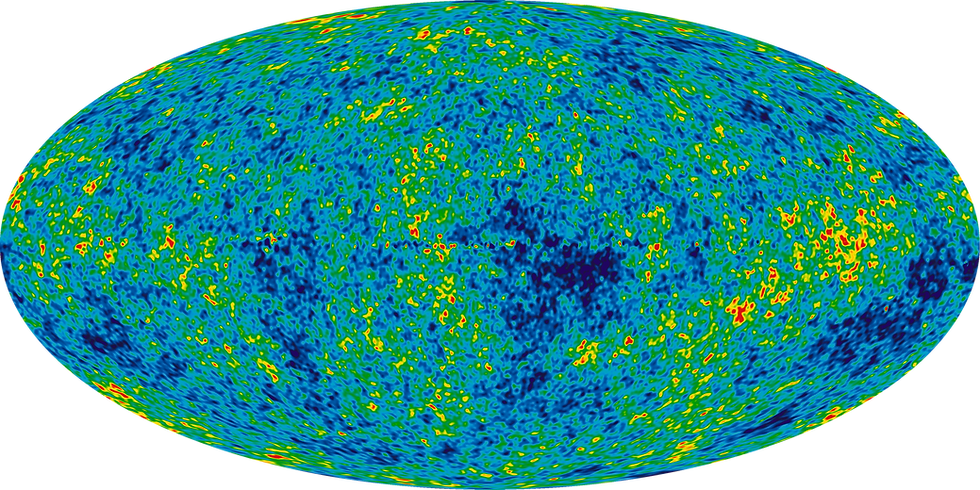
Dark matter cannot be seen directly because it neither emits nor absorbs light, but its presence is inferred from gravitational effects on visible matter and cosmic structures. The breakthrough came from analyzing high-energy gamma rays—photons that carry immense energy—centered around 20 billion electronvolts (GeV). These rays form a spherical halo around the galaxy’s core, a region dense with dark matter. According to the researchers, this gamma-ray signature fits models where hypothetical dark matter particles called Weakly Interacting Massive Particles (WIMPs) annihilate each other to produce gamma radiation.
This discovery is significant because it provides a potential indirect detection of dark matter through a measurable and unique signal. The gamma-ray halo’s energy distribution and shape cannot be easily explained by known astrophysical sources such as pulsars, supernova remnants, or cosmic ray interactions. The findings provide a crucial clue that physicists have sought for nearly a century in their quest to understand the universe’s unseen mass.
While promising, these results are the starting point for further scrutiny and validation. Scientists will investigate similar gamma-ray emissions from other dark matter-rich regions, including dwarf galaxies, to confirm the presence and behaviour of dark matter particles. Complementary detection methods, such as underground particle detectors and cosmic surveys, are expected to contribute additional evidence.
If confirmed, this discovery will not only validate decades of theoretical work but could open the door to new physics beyond the Standard Model, akin to the impact of the Higgs boson discovery. It may unveil a new fundamental particle and deepen our understanding of cosmic formation and evolution.
In summary, the newly observed gamma-ray halo surrounding the Milky Way’s center could mark humanity’s first real glimpse of dark matter, a dominant and mysterious substance influencing the cosmos at every scale. This breakthrough brings us closer to solving one of science’s most profound mysteries by revealing the particles that compose the dark matter enveloping our universe.


Comments