ISRO LVM3-M6 Launch: BlueBird Block-2 Success Marks Heaviest Satellite Milestone in 2025
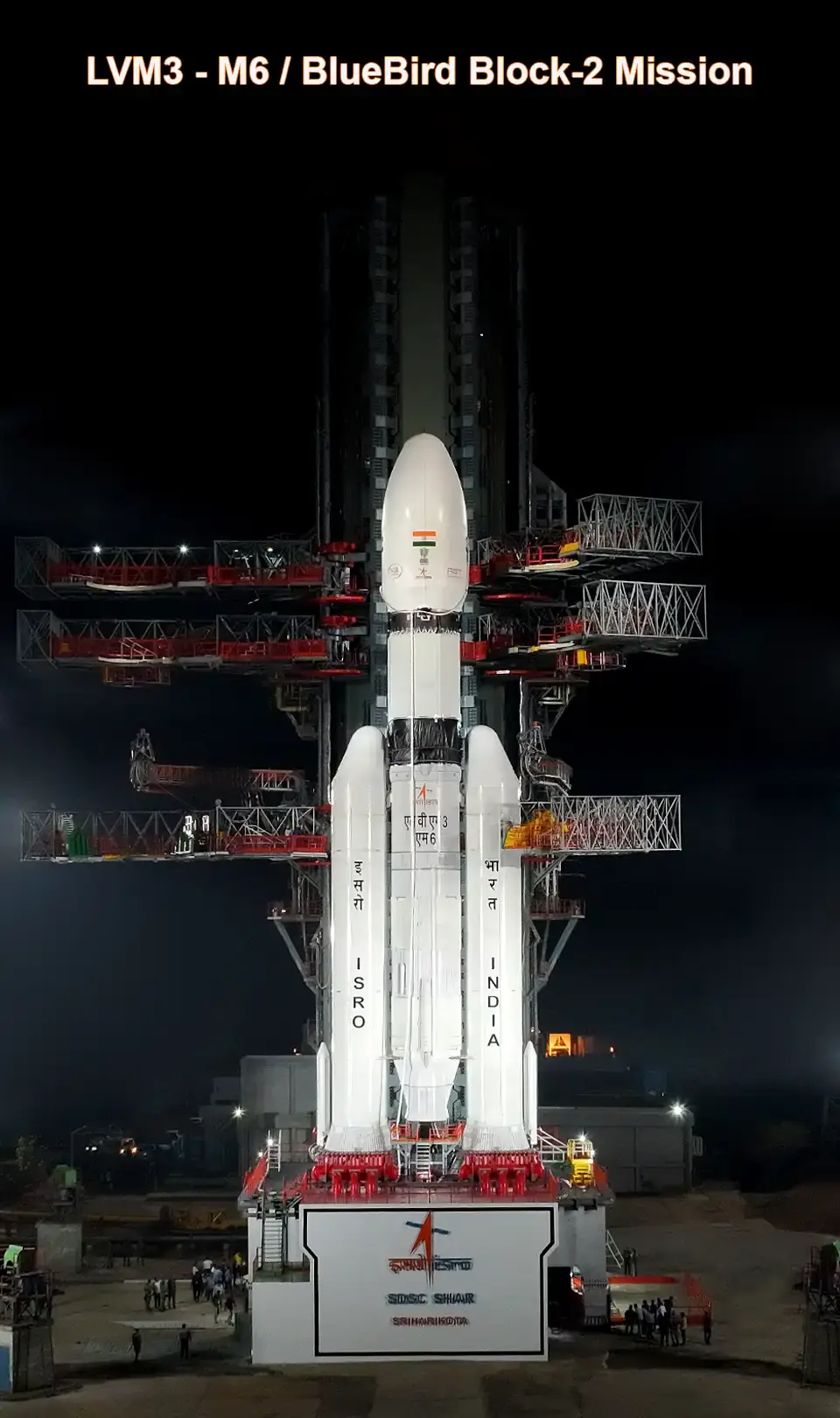
ISRO LVM3-M6 BlueBird Block-2 Launch
India’s space agency ISRO achieved a landmark victory with the LVM3-M6 rocket launch on December 24, 2025, deploying the BlueBird Block-2 satellite into orbit. This mission, handled by NewSpace India Limited (NSIL), carried the heaviest commercial payload ever launched from Indian soil, weighing approximately 6,500 kg. The success reinforces ISRO’s prowess in heavy-lift launches, drawing global acclaim including from Prime Minister Narendra Modi.
Mission Details and Technical Highlights
The LVM3-M6, often called India’s “Bahubali” rocket for its robust capabilities, features a three-stage design with two S200 solid strap-ons, an L110 liquid core stage, and a C25 cryogenic upper stage. This configuration delivered the BlueBird Block-2, a communications satellite built by US firm AST SpaceMobile, to a Low Earth Orbit (LEO) at over 520 km altitude.
Key specs include the satellite’s advanced phased-array antennas designed for space-based cellular broadband, enabling direct connectivity to unmodified smartphones without ground infrastructure. The payload marks the heaviest ever for LVM3, surpassing previous records and validating the rocket’s 4-tonne-to-GTO capacity upgrades. ISRO’s official page confirms precise injection, with all stages performing flawlessly.
This sixth operational flight of LVM3 underscores years of refinements since its debut in 2014, positioning India as a reliable partner for international commercial missions.

Launch Timeline and Challenges Overcome
Initial plans targeted mid-December 2025, but technical hurdles during rocket assembly and satellite integration prompted delays. Regional reports noted postponements from December 15 to 21, and finally to December 24 at 08:54 AM IST from the Satish Dhawan Space Centre in Sriharikota.

Live streams on YouTube and ISRO’s X account captured the liftoff, with the rocket ascending under clear skies. Post-separation, the satellite achieved its orbit, triggering celebrations and Modi’s praise for India’s soaring space ambitions. No anomalies reported as of December 24, 11:33 AM IST, confirming full success.
These delays highlight the meticulous integration process for such massive payloads, yet ISRO’s agility ensured timely execution amid festive season pressures.
Global Impact and Commercial Significance
The BlueBird Block-2 mission extends AST SpaceMobile’s constellation for worldwide broadband access, bridging digital divides in remote regions from space. By partnering with NSIL, the US firm leverages ISRO’s cost-effective launches—about 30% cheaper than competitors—boosting global satellite deployment economics.
This launch follows ISRO’s string of successes like OneWeb and AdaniConneX missions, cementing India’s share in the $10 billion commercial launch market. For AST SpaceMobile, it accelerates 5G-like services via LEO, potentially serving billions without cell towers, impacting telecom giants like AT&T and Verizon.
Economically, NSIL’s revenue from such deals funds indigenous programs like Gaganyaan and SSLV, aligning with Atmanirbhar Bharat. Globally, it challenges SpaceX dominance, offering reliable alternatives amid rising demand for LEO constellations.
Technological Advancements Driving Success
ISRO’s LVM3 evolution includes enhanced cryogenic engines and reusable tech explorations, with this mission testing heavier payload handling. BlueBird’s tech—massive antenna arrays unfolding in orbit—pioneers direct-to-device comms, rivaling Starlink’s model but focused on cellular integration.
The rocket’s precision navigation ensured sub-km accuracy, vital for mega-constellations. Future LVM3 variants may target 5-6 tonne GTO, eyeing Mars and lunar missions. This prowess stems from indigenous avionics and propellants, reducing foreign dependency.
Future Prospects for ISRO and Space Industry
Post-BlueBird, ISRO eyes more NSIL-led commercials, including next-gen satellites and human spaceflight. The mission’s data refines reusability for LVM4, potentially halving costs. Globally, it signals India’s readiness for Artemis Accords contributions and private sector tie-ups via IN-SPACe.
For AST SpaceMobile, Block-2 joins prior launches, fast-tracking full constellation by 2026 for ubiquitous coverage. Challenges like orbital debris and spectrum allocation persist, but this success mitigates them through proven reliability.
Investors note the launch’s timing amid Trump administration’s space push, potentially unlocking US-India pacts. As 2025 closes, LVM3-M6 exemplifies how emerging space powers drive inclusive innovation.
Why This Launch Matters for Space Enthusiasts
Space watchers globally tuned in via ISRO’s feeds, with Reddit and X buzzing over visuals of the fiery ascent. The heaviest payload feat rivals PSLV records, inspiring STEM in India. For content creators tracking ISRO launches, this event spikes searches for “LVM3 M6 BlueBird updates.”
PM Modi’s endorsement amplifies national pride, linking to Viksit Bharat 2047 goals. As BlueBird activates, expect service demos revolutionizing connectivity in underserved Asia-Pacific zones.


Comments